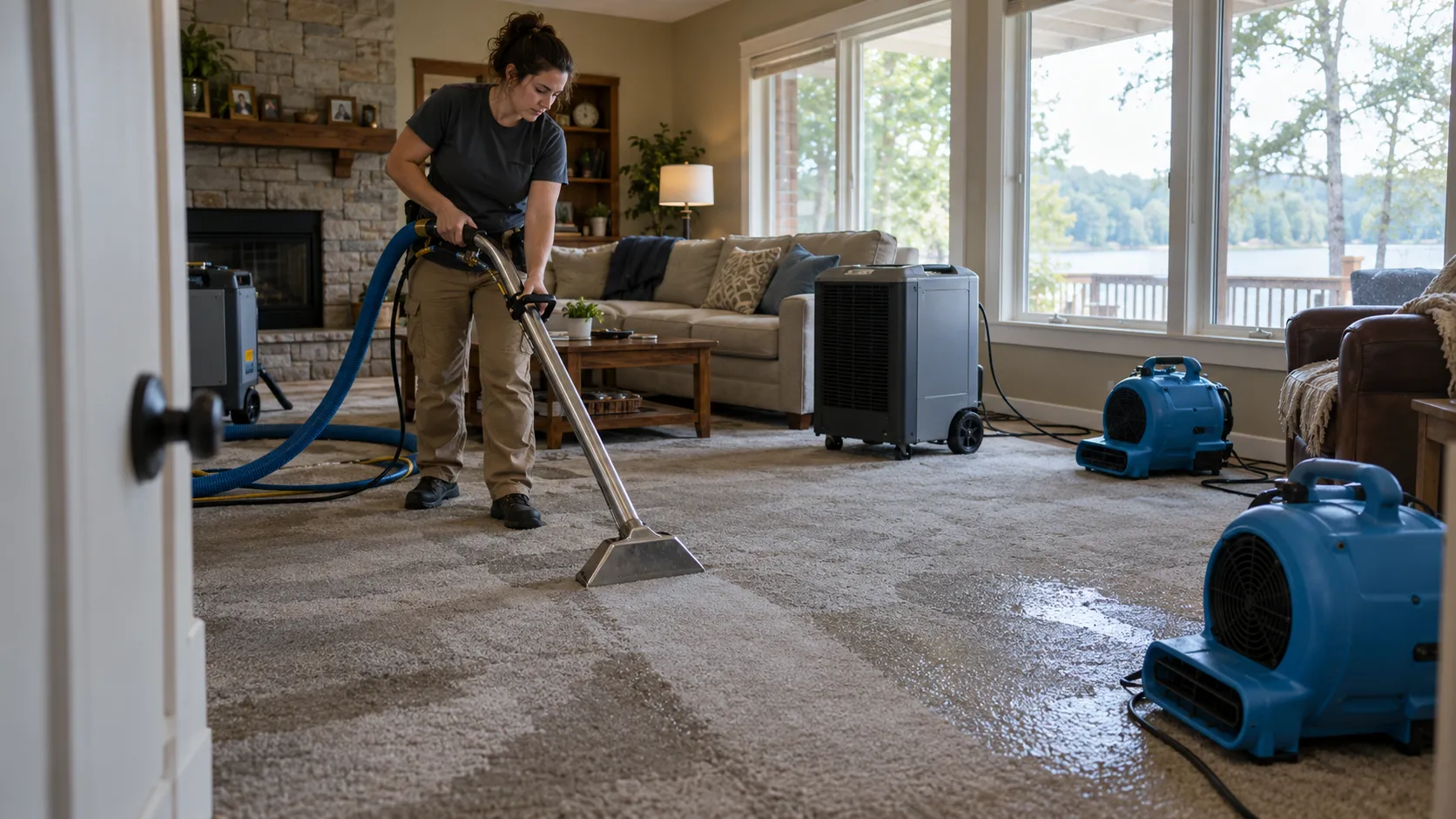
Water extraction and structural drying is the urgent first stage after a leak or flood. Extraction removes standing water and pulls water out of carpet and pad. Structural drying then removes the moisture hiding inside drywall, wood framing, subfloors and cabinets, using air movers and dehumidifiers.
Highhelped Restoration is a referral service. When you call, we connect you with an independent local provider in the Ventura County area who does this work. The provider measures moisture, sets up drying equipment, and checks progress until the materials reach normal dryness levels. Getting water out early is one of the most useful things you can do to limit damage and reduce the risk of mold. Ask the provider for a written estimate and an idea of how many days the equipment will need to run.
Standing Water? Get It Out Now
If you have standing water in your home, every hour counts. Water that sits on a floor keeps soaking into carpet, pad, wood and drywall. The more it soaks in, the harder and longer it is to dry.
Before anything else, stay safe. Keep out of water that may be touching outlets, cords or appliances. Shut off the water source if you can. If the power panel is in a dry spot, turn off power to the wet area.
Then call for help. A provider with extraction equipment can remove far more water, far faster, than mops or a shop vacuum.
Why Fast Extraction Matters
Water does most of its damage when it's left to sit. Here's what removing it early helps prevent:
- Wicking. Drywall pulls water upward like a sponge. The longer water stands, the higher it climbs.
- Swelling and warping. Wood floors, baseboards, door frames and cabinet bases can swell and cup.
- Delamination. Carpet backing can separate, and laminate flooring can lift and buckle.
- Mold growth. In damp, warm conditions, mold can begin to grow within one to two days.
- Odors. Wet materials that stay wet start to smell musty and sour.
Extraction removes the bulk water. Drying takes care of the rest.
How Water Extraction Works
Extraction is the first hands-on step. The provider uses equipment built to pull water out quickly.
Truck-Mounted and Portable Extractors
Powerful extraction units suck standing water off floors and pull water out of carpet and pad. Truck-mounted units are common for large losses. Portable units work well in upper floors and tight spaces.
Submersible Pumps
When water is several inches deep, pumps move it out first. Then extractors handle what's left.
Weighted Extraction Tools
Some providers use tools that press down on wet carpet while extracting. This squeezes out more water from the pad below, which can shorten drying time.
After extraction, the provider decides what can stay and what should go. Soaked carpet pad is often removed because it holds water and dries slowly. Carpet itself can sometimes be saved if the water was clean and caught early.
How Structural Drying Works
Once the standing water is gone, the hidden moisture is the real challenge. Water that has soaked into walls, framing and subfloors won't dry quickly on its own. Structural drying is the process of pulling that moisture out in a controlled way.
Moisture Mapping
The provider uses moisture meters and thermal tools to find wet areas, including spots you can't see. These readings set a starting point and guide where equipment goes.
Air Movers
High-speed fans push air across wet surfaces. This helps moisture evaporate from floors, walls and cabinets.
Dehumidifiers
As moisture evaporates, it goes into the air. Commercial dehumidifiers pull that moisture back out so it doesn't settle in other parts of the home.
Opening Up Wet Areas
Sometimes air needs a path. The provider may remove baseboards, drill small holes near the bottom of walls, or open cabinet toe kicks so air can reach trapped moisture.
Daily Monitoring
Drying is checked with readings, not guesses. The provider takes moisture readings during the job and adjusts equipment as needed. Drying is done when materials reach normal moisture levels for your area.
How Long Does Drying Take?
Most homes take about three to five days to dry, though some take longer. Drying time depends on:
- How much water there was and how long it sat
- What the materials are, such as hardwood, tile, plaster or drywall
- The weather and indoor humidity
- How much equipment can be set up in the space
It's normal for the equipment to be loud and for the room to feel warm. Try to leave it running and keep windows and doors closed unless the provider says otherwise.
Turning equipment off early can slow the job down. It can also leave moisture behind in places you can't see, like the bottom plate of a wall or the subfloor under a cabinet. That hidden moisture is what often leads to mold and odors later. Let the readings decide when the job is done.
What You Can Do While You Wait
Until help arrives, a few small steps can make a difference:
- Move furniture, rugs and electronics out of wet areas.
- Put foil or blocks under furniture legs that can't be moved.
- Lift curtains and bed skirts off the floor.
- Take photos and video for your records.
- Don't use a household vacuum on wet floors.
- Don't turn on ceiling fans if the ceiling is wet or sagging.
Questions to Ask the Provider
The providers in our network are independent businesses, so it helps to ask a few questions:
- What equipment will you use, and how many units?
- How will you track moisture levels during drying?
- What needs to be removed, and why?
- Can I get a written estimate before you start?
You're never obligated to hire the first provider you speak with.
Have standing water now? Call to check provider availability near you.
What's Included
Standing Water Removal
Pumps and extractors remove water from floors, carpet and pad as quickly as the equipment allows.
Moisture Mapping
Meters and thermal tools find hidden moisture in walls, subfloors and cabinets.
Air Movers and Dehumidifiers
Drying equipment is placed to pull moisture out of the structure and the air.
Monitoring Until Dry
Moisture readings are taken during the job so drying ends only when materials are back to normal.
What Do Water Extraction and Drying Cost?
Pricing depends on the amount of water, the area affected and how long equipment needs to run. These are typical U.S. ranges that vary by job, so ask for a written quote.
| Item | Typical range | Notes |
|---|---|---|
| Water extraction | $1 – $4 per sq ft | Depends on depth and flooring type |
| Small-area extraction and drying | $500 – $1,500 | One room, clean water, caught early |
| Whole-floor drying job | $2,000 – $6,000 | Several rooms over a few days |
| Air mover | $25 – $50 per unit per day | Several units are usually needed |
| Commercial dehumidifier | $70 – $150 per unit per day | Size depends on the space |
| Carpet pad removal | $0.50 – $1.50 per sq ft | Pad is often replaced after soaking |
How It Works
1. Call Highhelped Restoration
Tell us about the water and your location. We connect you with a local provider.
2. Extraction
The provider pumps and extracts standing water and removes soaked materials as needed.
3. Drying Setup
Moisture is mapped, and air movers and dehumidifiers are placed through the wet areas.
4. Monitoring and Wrap-Up
Readings are taken until materials reach normal levels, then the equipment is removed.
Why Call Highhelped Restoration
Quicker Path to Help
One call connects you with a local provider, so you can get extraction started sooner.
Proper Equipment
Providers use extractors, air movers and dehumidifiers that go well beyond household fans.
Measured Results
Drying is tracked with moisture readings, so you know when the job is really done.
No Obligation
Ask questions, get a written estimate and decide what's right for your home.